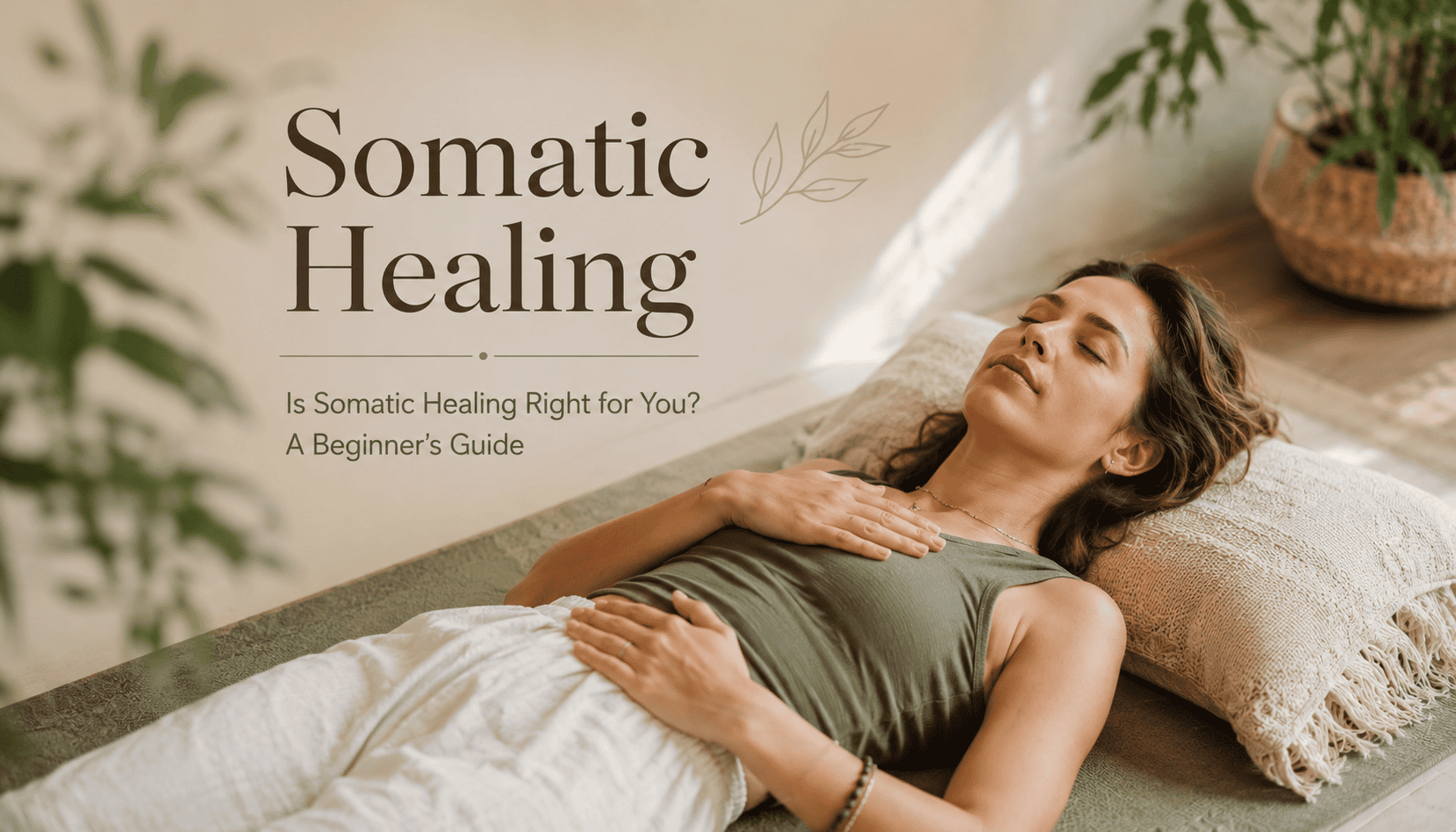

In a world that often feels fast, demanding, and overstimulating, many of us move through the day carrying tension without even realizing it. Healing begins with safety — not just mentally, but in the body.
One of the most powerful somatic safety practices you can do is surprisingly simple: slowly gazing around the room before closing your eyes and connecting inward.
It may seem small, but this practice can deeply support nervous system regulation, help release anxiety, and expand your body’s window of tolerance — your capacity to stay grounded through life’s challenges.
Why Safety Comes First in the Body
Before the body can relax, it needs to know it is safe.
This is a foundational principle in somatic healing and nervous system work. Our bodies are constantly scanning the environment for cues of danger or safety — a process known in the field of neuroception.
Even when there is no immediate threat, the nervous system can remain in a subtle state of vigilance, especially if you’ve been under stress, overwhelmed, or carrying unresolved emotional tension.
That’s why simply closing your eyes and “trying to relax” can sometimes feel difficult.
The body may still be asking: Am I safe enough to soften?
The Animal Wisdom of Orienting
In nature, animals instinctively orient themselves when entering a new space.
They pause. They look around. They assess. They gather information.
Only when their nervous system registers safety do they settle.
Humans have this same biological intelligence.
This somatic practice is called orienting — gently allowing your eyes, head, and neck to slowly scan your environment.
Not rushing. Not searching for danger. Just noticing.
The light. The colors. The corners of the room. The shapes. The exits. The stillness.
This signals to the nervous system:
“I am here. I am safe. There is no threat right now.”
A Somatic Safety Practice to Reduce Anxiety
Try this before meditation, breathwork, or even before starting your day.
1. Pause and Arrive
Sit or stand comfortably. Let your feet meet the ground.
Feel the support beneath you.
2. Slowly Look Around the Room
Move your gaze like an animal entering a new space.
Let your eyes land naturally.
Take your time.
Notice what feels neutral or pleasant.
Maybe sunlight on the wall. A soft texture. A plant. A familiar object.
This helps anchor your nervous system in present-time safety.
3. Let Your Breath Follow
Once your body feels a little softer, gently close your eyes if it feels right.
Take a slow inhale.
And an even slower exhale.
No forcing.
Just allowing.
4. Connect to Your Body
Notice sensations.
Warmth. Tingling. Tightness. Softness.
Let your body speak before your mind takes over.
Expanding Your Window of Tolerance
The window of tolerance refers to the zone where you can experience stress without becoming overwhelmed, shut down, or reactive.
When your nervous system is dysregulated, this window becomes smaller.
Small stressors can feel huge.
Simple tasks can feel overwhelming.
But somatic safety practices help widen this window. By repeatedly teaching your body:
“It is safe to be here.”
You increase your capacity to:
- Stay grounded under pressure
- Respond instead of react
- Feel emotions without being flooded
- Move through the day with more ease
This is how resilience is built — not through force, but through regulation.
Somatic Healing for Anxiety Starts with Slowness
Anxiety often lives in speed.
Fast thoughts. Fast breathing. Fast reactions.
Somatic work invites the opposite.
Slowness. Presence. Orientation. Breath. Safety.
And from safety, the nervous system can begin to unwind.
Begin your day not by pushing forward, but by first asking your body what it needs to feel safe.
Because when the body feels safe, healing becomes possible.
And when healing becomes possible, life feels lighter.
Final Practice Reminder
Before you close your eyes today:
Look around.
Move slowly.
Let your body arrive.
Then breathe.
Your nervous system is always listening.
Give it the message of safety.